
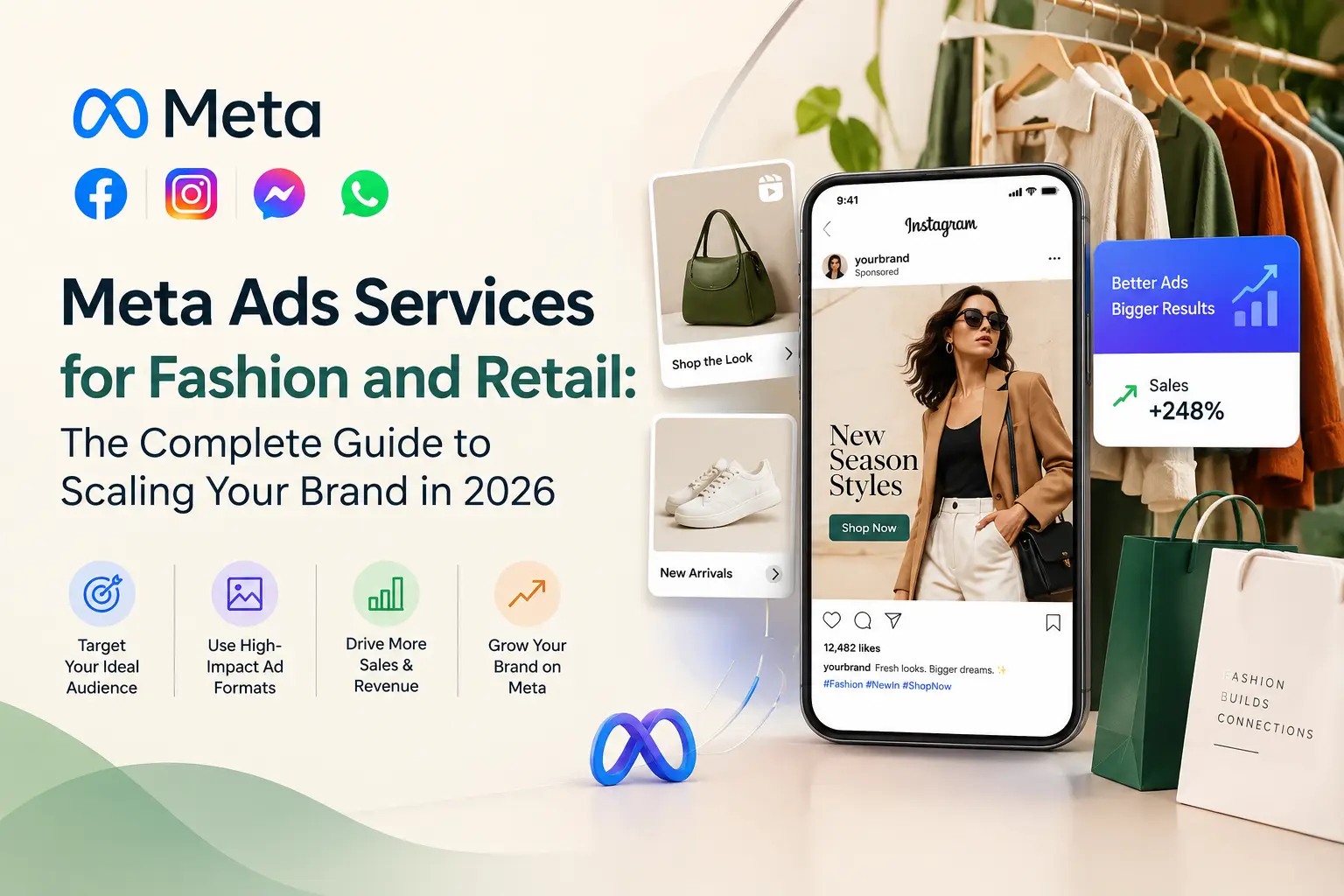
The fashion and retail industry has always been driven by visual storytelling, emotional connection, and impulse-driven purchase decisions. No advertising platform on the planet caters to these three ingredients better than Meta, the parent company of Facebook, Instagram, Messenger, and WhatsApp. With over 3.9 billion monthly active users across its family of apps, Meta has become the single largest digital shop window available to fashion and retail brands, whether you’re a boutique streetwear label or a multi-national apparel conglomerate.
But running ads on Meta is no longer as simple as boosting a post and hoping for sales. The platform’s algorithm, ad formats, targeting capabilities, and measurement tools have evolved dramatically, and brands that don’t adapt are leaving significant revenue on the table. This is where dedicated Meta Ads services come in specialized agencies and consultants who understand the nuances of Meta’s advertising ecosystem specifically as it applies to fashion and retail.
In this guide, we’ll walk through everything fashion and retail businesses need to know about Meta advertising: why it matters, what a professional Meta Ads service actually does, the ad formats and strategies that work best, how to measure success, and how to choose the right partner for your brand.
Why Meta Ads Matter So Much for Fashion and Retail
1. Visual-First Platforms Match Visual-First Products
Fashion is inherently visual. Buyers want to see how a garment drapes, moves, and looks in different settings before they commit to a purchase. Instagram and Facebook are built around images, carousels, Reels, and Stories — formats that let clothing, accessories, and retail products shine in ways that text-based or search-based advertising simply cannot replicate.
2. Massive, Highly Segmented Audience Pool
Meta’s targeting infrastructure allows brands to reach incredibly specific audience segments: women aged 25–34 interested in sustainable fashion, men who follow streetwear influencers, parents shopping for back-to-school retail deals, or shoppers who have previously engaged with a competitor’s page. This level of granularity means fashion brands of any size — from a solo Etsy-style designer to a national retail chain — can find and speak directly to their ideal customer.
3. Full-Funnel Capability
Unlike many platforms that specialize in either brand awareness or bottom-funnel conversion, Meta covers the entire customer journey. A single campaign structure can move a shopper from first discovering a product in a Reel, to browsing a catalog ad, to receiving a retargeting ad with a discount code, to completing checkout all within the Meta ecosystem, and increasingly, without ever leaving the app thanks to in-app checkout features.
4. Seamless Integration with E-Commerce Platforms
Meta integrates directly with Shopify, WooCommerce, Magento, BigCommerce, and other major e-commerce platforms. This means product catalogs can sync automatically, inventory updates reflect in real time, and dynamic ads can be generated without manual creative work for every SKU a massive advantage for retailers with large product ranges.
5. Social Proof and Community Building
Fashion and retail purchases are heavily influenced by social validation — reviews, user-generated content, and influencer endorsement. Meta’s ad formats are designed to showcase comments, likes, and shares alongside the ad itself, reinforcing trust at the exact moment a potential customer is evaluating a purchase.
What Does a Meta Ads Service Actually Do?
A professional Meta Ads service (whether an agency, freelance specialist, or in-house consultancy) typically covers a comprehensive suite of responsibilities designed to take the guesswork out of advertising on the platform. Here’s a breakdown of the core pillars.
Account Audit and Strategy Development
Before spending a single dollar, a good Meta Ads service will audit your existing account structure (if you have one), review historical performance data, analyze your competitors’ advertising approaches, and identify gaps in your current strategy. From there, they build a tailored roadmap that aligns with your specific goals whether that’s brand awareness for a new clothing line, lead generation for a made-to-order service, or direct sales for an established e-commerce store.
Audience Research and Segmentation
This involves building out Custom Audiences (based on website visitors, customer lists, or app activity), Lookalike Audiences (modeled after your best existing customers), and interest- or behavior-based targeting layers. For fashion and retail specifically, this often means segmenting by style preference, price sensitivity, purchase frequency, and seasonal buying patterns.
Creative Strategy and Production
Because Meta is a visual platform, creative is arguably the single most important lever in campaign performance. Services typically manage:
- Static image ads showcasing individual products or collections
- Carousel ads that let shoppers swipe through multiple items or looks
- Video ads and Reels demonstrating how garments fit and move
- User-generated content (UGC) campaigns featuring real customers
- Collection ads that pair a hero video or image with a scrollable product catalog beneath it
Campaign Structuring and Funnel Mapping
A well-run Meta Ads account is structured around the customer journey typically split into Awareness, Consideration, and Conversion stages, each with its own objectives, creative approach, and budget allocation. Retargeting sequences are built to re-engage cart abandoners, past purchasers (for repeat buying or upsells), and users who have watched a certain percentage of a video ad.
Catalog and Dynamic Ads Management
For retailers with large inventories, dynamic product ads (DPAs) are essential. These automatically show the exact products a user viewed on your website or app, along with similar or complementary items, without requiring a unique ad to be built for every SKU. A Meta Ads service will manage feed hygiene, product tagging, seasonal catalog updates, and troubleshooting for any catalog disapprovals.
Budget Management and Bidding Strategy
Services handle daily or lifetime budget allocation across campaigns, choose appropriate bid strategies (cost cap, bid cap, highest volume, etc.), and continuously reallocate spend toward top-performing ad sets often using Meta’s Advantage+ automation tools alongside manual oversight.
Performance Tracking, Reporting, and Optimization
This includes setting up the Meta Pixel and Conversions API (CAPI) correctly, building custom reporting dashboards, tracking key metrics (ROAS, CPA, CTR, frequency, etc.), and running structured A/B tests on creative, copy, audiences, and placements. Reporting is typically delivered weekly or bi-weekly with clear recommendations for the next optimization cycle.
Compliance and Policy Navigation
Fashion and retail ads must comply with Meta’s advertising policies around before/after imagery, health claims (relevant for shapewear or cosmetics-adjacent apparel), and intellectual property. A good service keeps campaigns compliant to avoid disapprovals or account restrictions that could halt sales momentum.
Ad Formats That Work Best for Fashion and Retail
Collection Ads
Collection ads pair a cover image or video with a grid of products beneath it, allowing shoppers to browse a curated look or category without leaving the app. This format is particularly effective for seasonal launches, capsule collections, and gift guides.
Carousel Ads
Carousels let brands showcase multiple products, multiple angles of a single product, or a step-by-step styling story. They’re highly effective for retailers with diverse catalogs who want to demonstrate range within a single ad unit.
Instagram and Facebook Reels Ads
Short-form video content dominates engagement on Meta platforms today. Reels ads showing outfit transitions, try-on hauls, unboxing experiences, or behind-the-scenes production footage tend to outperform static imagery in both engagement and, increasingly, conversion metrics.
Dynamic Product Ads (Retargeting)
These automatically populate with products a user has previously viewed, added to cart, or purchased alongside similar items, a cornerstone of any performance-driven retail campaign.
Advantage+ Shopping Campaigns
Meta’s AI-driven Advantage+ campaigns simplify campaign setup by automating audience targeting, placements, and budget allocation based on machine learning predictions. Many fashion retailers now run a hybrid approach Advantage+ for scale and efficiency, paired with manually structured campaigns for specific launches or evergreen retargeting.
Instant Experience (Full-Screen Mobile Ads)
These immersive, full-screen ad experiences load instantly and can combine video, images, and product carousels into a single interactive unit ideal for lookbook-style storytelling or new collection launches.
Influencer and Branded Content Ads
Whitelisting or “creator ads” allow brands to run paid ads directly from a creator’s handle, preserving the authenticity of influencer content while gaining full targeting and optimization capabilities of a standard paid ad.
Building a Full-Funnel Meta Ads Strategy for Fashion and Retail
Top of Funnel: Awareness
At this stage, the goal is to introduce your brand or a new collection to cold audiences who have never interacted with you before. Video content, brand storytelling, and broad interest-based or Lookalike Audiences work well here. Metrics to watch include reach, video view rate, and cost per thousand impressions (CPM) — not immediate sales.
Middle of Funnel: Consideration
Here, the focus shifts to warmer audiences — people who have engaged with your content, visited your website, or interacted with your Instagram profile. Carousel ads showing product details, customer reviews, or comparison content help build purchase intent. Engagement metrics like click-through rate and add-to-cart rate become more important.
Bottom of Funnel: Conversion
This is where dynamic retargeting ads, limited-time discount codes, and cart abandonment sequences come into play. Audiences here are the warmest people who have added to cart, viewed a specific product multiple times, or previously purchased. ROAS (return on ad spend) and cost per purchase are the primary KPIs.
Post-Purchase: Retention and Loyalty
Many fashion and retail brands neglect this stage, but Meta Ads services increasingly build campaigns targeting existing customers with complementary product recommendations, loyalty program invitations, or early access to new drops turning one-time buyers into repeat customers.
Seasonal and Event-Driven Campaign Planning
Fashion and retail are uniquely tied to calendar-driven demand spikes: Black Friday and Cyber Monday, back-to-school season, holiday gifting, Valentine’s Day, Mother’s Day, and seasonal wardrobe transitions (spring/summer and fall/winter collections). A specialized Meta Ads service will typically build a 12-month content and campaign calendar in advance, ensuring:
- Creative assets are produced well ahead of key shopping windows
- Budgets are pre-planned to scale spend during high-intent periods
- Retargeting audiences are “warmed up” with awareness content before major sales events
- Post-event campaigns are ready to re-engage shoppers who didn’t convert during the sale
This kind of proactive planning is one of the biggest differentiators between brands running ads reactively versus those working with a structured Meta Ads partner.
Common Challenges Fashion and Retail Brands Face on Meta
Rising Ad Costs and Auction Competition
Fashion is one of the most competitive verticals on Meta, meaning CPMs can be higher than in less saturated industries. A skilled Meta Ads service mitigates this through sharper audience segmentation, stronger creative differentiation, and smarter bid strategy rather than simply outspending competitors.
Creative Fatigue
Because fashion audiences are heavily visual and scroll quickly, ad creative fatigues faster than in many other industries. Services combat this by maintaining a consistent pipeline of fresh creative, testing multiple concepts simultaneously, and refreshing top performers regularly.
iOS Privacy Changes and Tracking Limitations
Since Apple’s App Tracking Transparency framework, tracking accuracy on Meta has become more complex. Proper implementation of the Conversions API (server-side tracking) alongside the standard Meta Pixel has become essential for accurate attribution and effective retargeting.
Return and Sizing Concerns
Apparel has notoriously high return rates, which can distort true profitability if not accounted for in ROAS calculations. Sophisticated services build return-adjusted profitability models rather than relying on gross revenue figures alone.
Balancing Automation with Control
Meta’s Advantage+ tools are powerful but can feel like a “black box” to brands used to granular manual control. A good service knows when to lean into automation for efficiency and when manual campaign structuring is still necessary for specific strategic goals, like an exclusive launch or a limited collaboration drop.
Key Metrics Every Fashion and Retail Brand Should Track
- ROAS (Return on Ad Spend): Revenue generated per dollar spent on ads
- CPA (Cost Per Acquisition): Cost to acquire a single paying customer
- AOV (Average Order Value): Average amount spent per transaction, often boosted through bundling and upsell ad strategies
- CTR (Click-Through Rate): Indicator of how compelling your creative and copy are
- Frequency: How often the same user sees your ad — critical for avoiding creative fatigue
- Add-to-Cart Rate: A strong middle-funnel signal of purchase intent
- Customer Lifetime Value (LTV): Especially important for brands running retention and loyalty campaigns
- New vs. Returning Customer Ratio: Helps balance prospecting spend against retargeting spend
How to Choose the Right Meta Ads Service for Your Fashion or Retail Brand
Look for Vertical-Specific Experience
Fashion and retail advertising has unique creative and operational demands compared to, say, SaaS or local services advertising. Ask potential partners for case studies or examples specifically within apparel, accessories, beauty, or general retail.
Ask About Creative Capabilities
Since creative is the biggest performance lever on Meta, ask whether the service has in-house creative production, works with UGC creators, or requires you to supply all assets. Agencies with strong creative pipelines typically outperform those that are purely media-buying focused.
Understand Their Reporting and Communication Cadence
You should expect clear, jargon-free reporting that ties ad performance back to actual business outcomes — not just platform vanity metrics. Ask how often you’ll receive updates and what a typical report includes.
Evaluate Their Approach to Testing
A strong service will have a structured, ongoing testing framework — for creative, audiences, and offers — rather than “set it and forget it” campaign management.
Check for Transparency on Fees and Ad Spend
Understand whether the service charges a flat fee, a percentage of ad spend, or a performance-based model, and make sure there’s clarity on how much of your budget goes toward actual media spend versus management fees.
Confirm They Handle Both Pixel and CAPI Setup
Given the current tracking landscape, proper server-side tracking implementation is no longer optional it’s foundational to accurate measurement and effective retargeting.
The Future of Meta Ads for Fashion and Retail
Looking ahead, several trends are shaping how fashion and retail brands should think about Meta advertising:
AI-generated and AI-assisted creative is becoming more prevalent, allowing brands to test more creative variations faster than ever, though human oversight remains essential for brand consistency and quality control.
In-app checkout and social commerce continue to deepen, reducing friction between discovery and purchase and blurring the line between “advertising” and “storefront.”
Augmented reality try-on features, particularly for accessories, eyewear, and cosmetics-adjacent fashion items, are increasingly integrated into ad units themselves.
Greater reliance on first-party data will continue as privacy regulations tighten, making email lists, loyalty program data, and direct customer relationships more valuable inputs for Custom Audience creation.
Creator-led and community-driven advertising will keep growing in importance, as audiences increasingly trust peer and creator recommendations over traditional brand messaging.
Brands that partner with a Meta Ads service capable of navigating these shifts rather than relying on outdated “boost post” tactics will be best positioned to capture growth in an increasingly competitive and privacy-conscious advertising landscape.
Conclusion
Meta’s advertising ecosystem remains one of the most powerful tools available to fashion and retail brands looking to build awareness, drive sales, and cultivate long-term customer loyalty. But the platform’s complexity spanning creative strategy, audience segmentation, catalog management, bidding algorithms, and privacy-driven tracking changes means that success rarely comes from simply throwing a budget at a boosted post.
A dedicated Meta Ads service brings the strategic structure, creative expertise, and technical know-how needed to turn Meta’s massive reach into measurable, sustainable revenue growth. Whether you’re a growing DTC apparel brand or an established retail chain looking to modernize your digital strategy, investing in proper Meta advertising management is no longer a luxury it’s a competitive necessity in today’s fashion and retail landscape.
If you’re ready to scale your fashion or retail brand on Meta, the most important first step is finding a partner who understands both the platform’s technical intricacies and the unique emotional, visual, and seasonal nature of the fashion and retail customer journey.